



Charging Stations for Google Devices
All-in-one charging stations designed for Google phones, Pixel Watch, and earbuds—streamlined power for every Google device you rely on.
9 Years of Wireless Charging Innovation
Free Shipping
1-Year Warranty
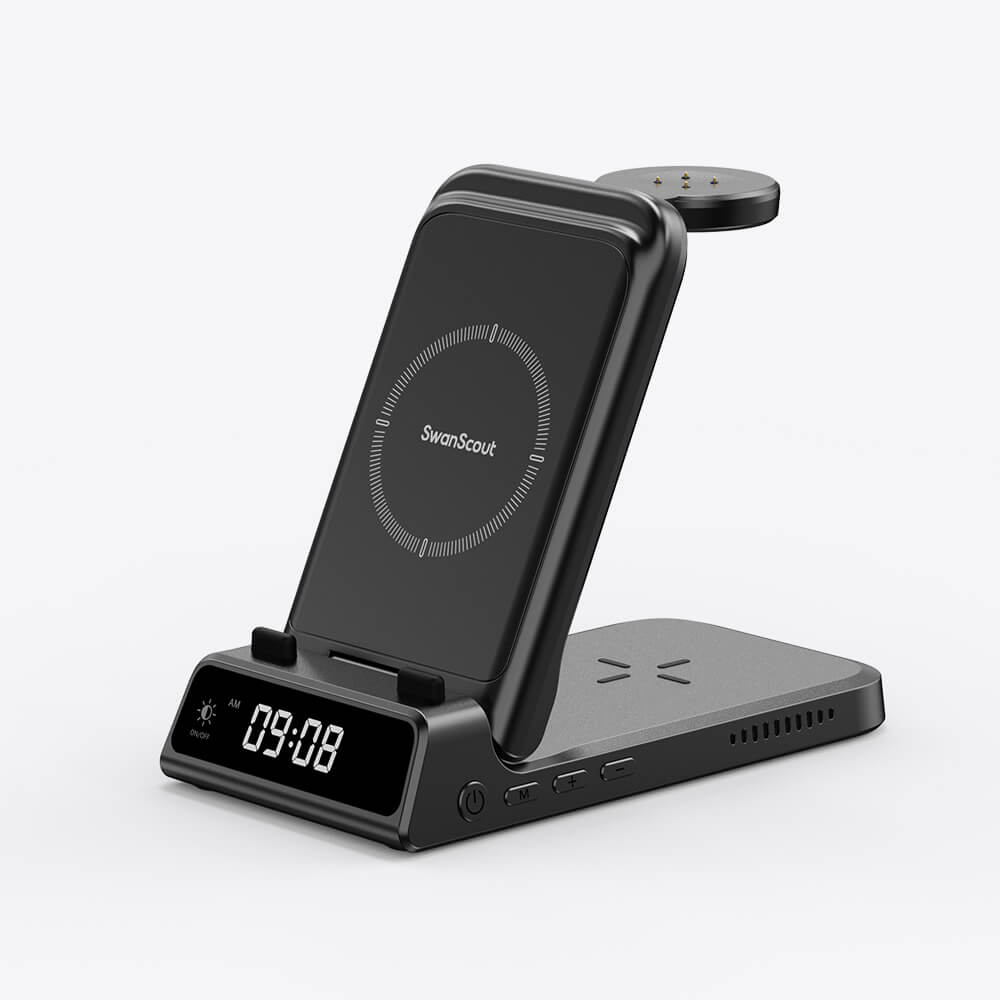
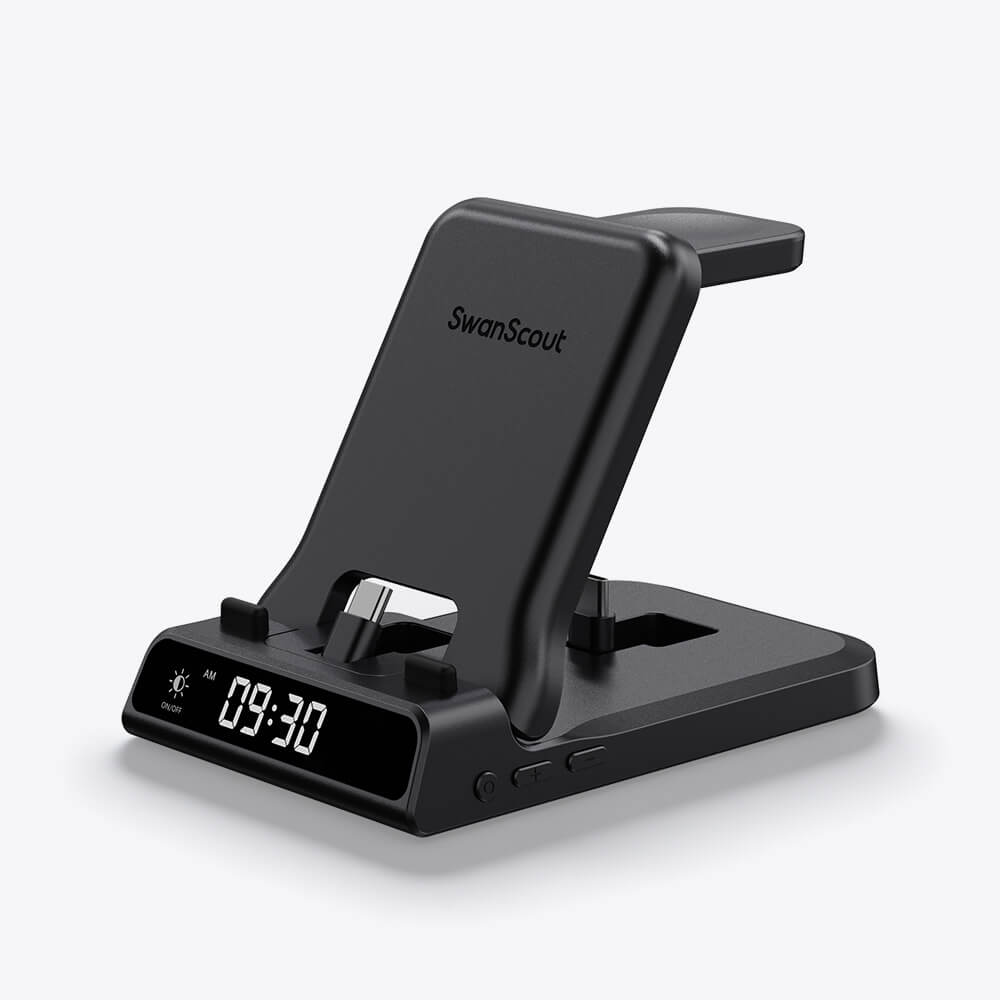
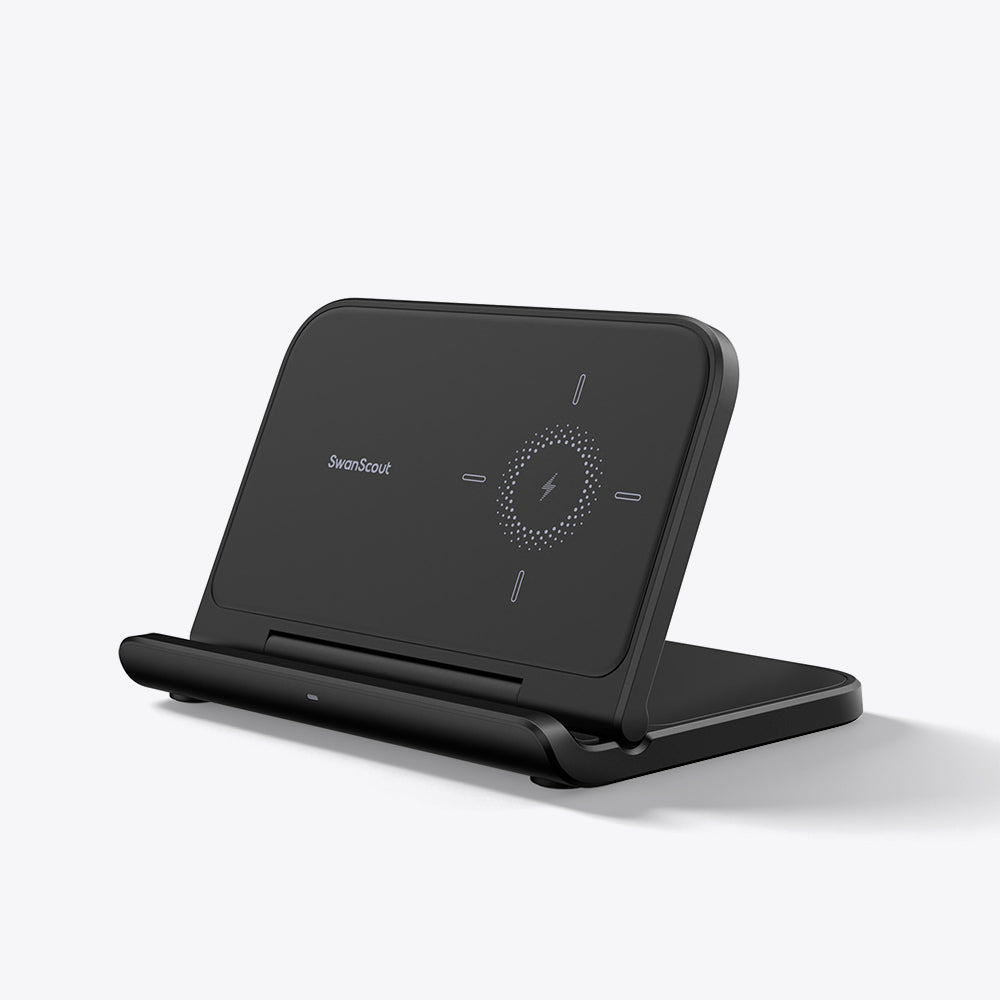


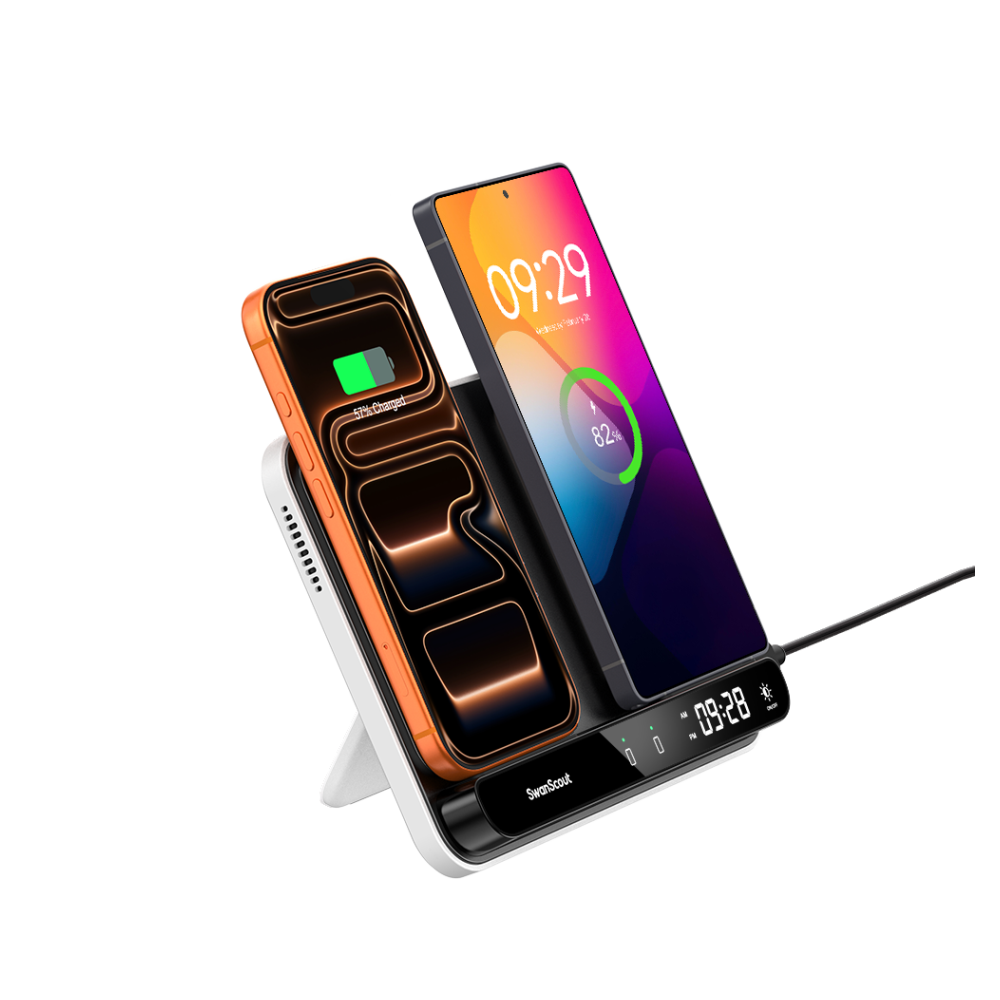




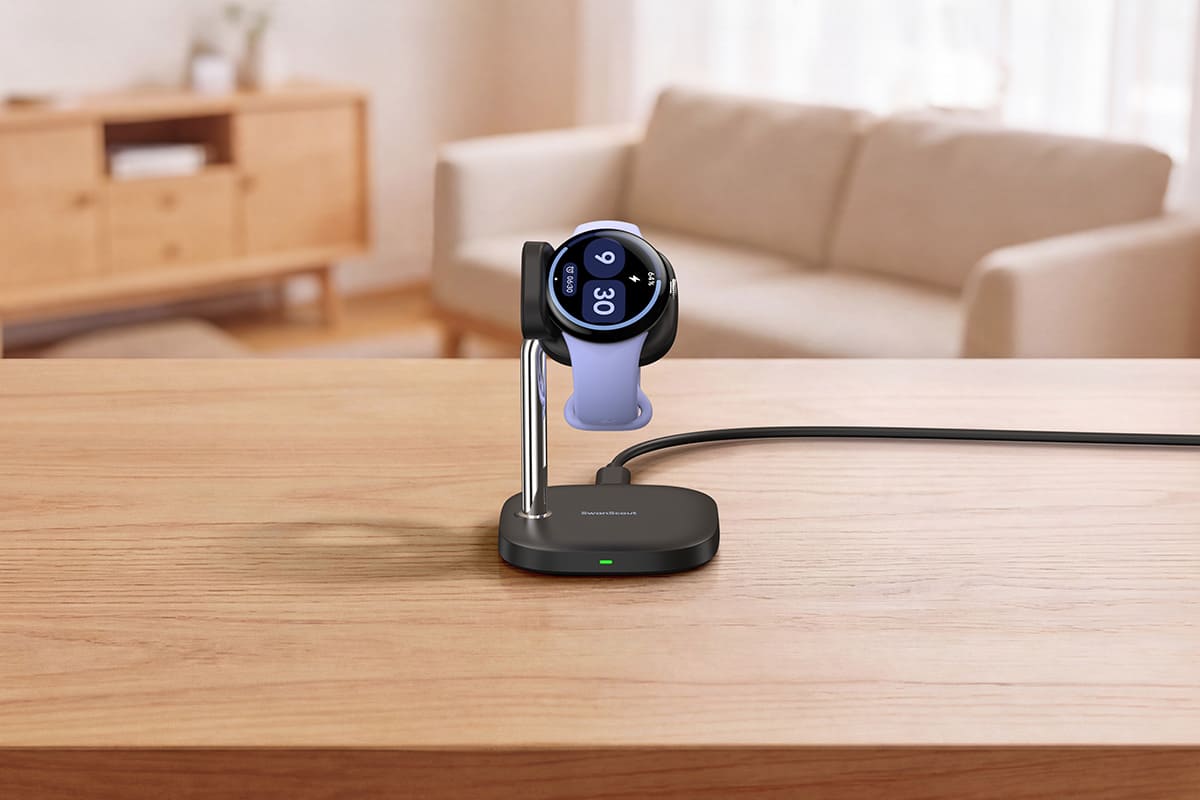
Magnetic Alignment for Pixel Watch
Due to differences in coil placement and charging requirements, SwanScout offers distinct wireless chargers tailored separately for the Pixel Watch 1 and for the Pixel Watch 2, Pixel Watch 3, and Pixel Watch 4.Each charger features generation-specific magnetic zones and contours to ensure precise fit and stable, efficient wireless charging performance.

Exquisite Craftsmanship
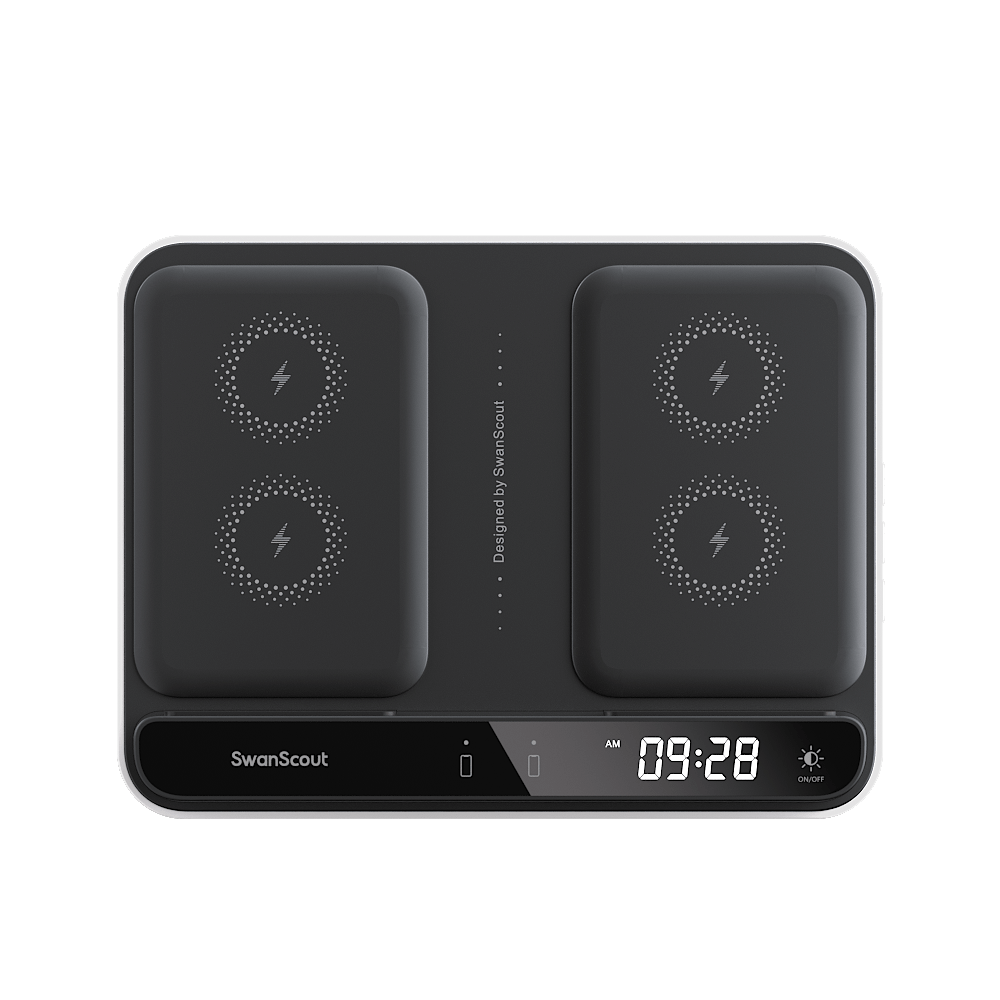
Premium wireless chargers designed for Google devices demonstrate advanced engineering and meticulous finishing. The SwanScout 708G2 model exemplifies this with its sculpted contours, durable plastic spray coating, precision UV printing, and thermoformed curved clock lens, delivering superior visual depth and tactile quality. Other models emphasize functional versatility and broad compatibility to accommodate diverse charging scenarios.
Frequently Asked Questions
Different generations of Pixel Watch use different charging structures and wireless charging implementations, which means that not all wireless charging docks are interchangeable.
The Pixel Watch (1st generation) uses an earlier contact-based charging design, which requires precise alignment between the charging coil and the physical structure of the dock. Starting from the Pixel Watch (2nd generation), the charging module and power management system were redesigned, resulting in different charging specifications and compatibility requirements.
Not all Google Pixel phones support wireless charging.
Wireless charging capability depends on whether the device is equipped with a Qi-compatible wireless charging coil.
Before using a wireless charger, please verify whether your specific Pixel phone model supports wireless charging. For models that do not support wireless charging, charging must be performed via a wired connection.
Due to its foldable design, the Google Pixel 9 Pro Fold has a different internal coil position compared to standard slab-style phones, which places higher requirements on charging alignment accuracy.
When using wireless charging, it is important to ensure that the phone is positioned at a height and location that allows proper coil alignment. If charging is unstable, adjusting the placement or using a charging dock with alignment assistance features can help improve charging stability.
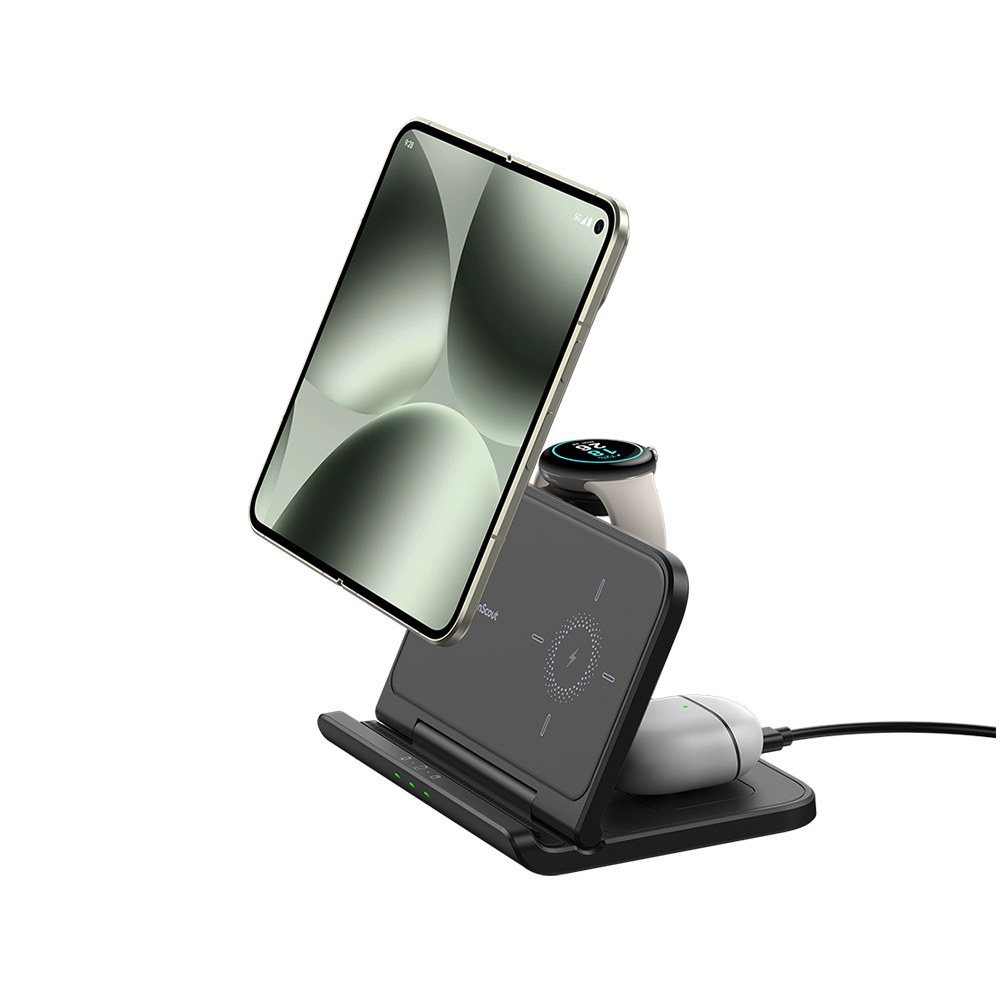
Foldable wireless chargers are typically designed to support multiple usage modes, allowing them to adapt to different devices and scenarios.
Stand mode
Ideal for viewing notifications, browsing content, or video calls while charging. If charging becomes unstable, slight adjustments to the stand angle can help improve coil alignment.
Flat mode
Suitable for charging phones or wireless earbuds. When charging earbuds, make sure the case is placed within the marked coil area to ensure consistent power transfer.
Whether a case needs to be removed depends primarily on its material, thickness, and internal structure.
Wireless charging relies on electromagnetic induction to transfer power. Cases made of non-metal materials such as silicone, TPU, or polycarbonate, and with moderate thickness, generally do not interfere with charging. However, cases that include metal components, magnetic accessories, ring holders, or excessive thickness may weaken the magnetic field, resulting in reduced charging efficiency or intermittent charging.
For long-term stability and safety, it is recommended to use cases with a simple structure and no metal interference when charging wirelessly.
A slight increase in temperature during wireless charging is normal. Compared to direct wired charging, wireless power transfer involves a degree of energy loss, which is released as heat.
Under normal conditions, the charging system regulates output power and temperature to remain within safe operating limits. Noticeable or abnormal heat buildup is typically associated with factors such as:
- Misalignment between the device and the charging coil, reducing transfer efficiency
- Interference from case materials or internal structures
- High ambient temperatures or limited heat dissipation
Adjusting device placement and ensuring adequate ventilation can help minimize excess heat and maintain stable charging.
From a technical perspective, wireless charging is generally less efficient than wired charging at the same power level. This is due to the inherent energy conversion losses involved in electromagnetic power transfer.
However, in real-world usage, charging speed is not the only consideration. Wireless charging prioritizes convenience, stable output, and automatic power regulation, making it well suited for desks, bedside tables, and other long-duration charging environments.
For overnight charging or daily top-ups, wireless charging provides a consistent and gentle charging experience without frequent cable connections, while also helping reduce wear on physical charging ports.